
Can those with a chocolate cyst have children? Here is what you need to know about chocolate cyst and infertility treatment
The most important reason why a chocolate cyst directly affects pregnancy is that the place where it forms is the main organs related to reproduction.
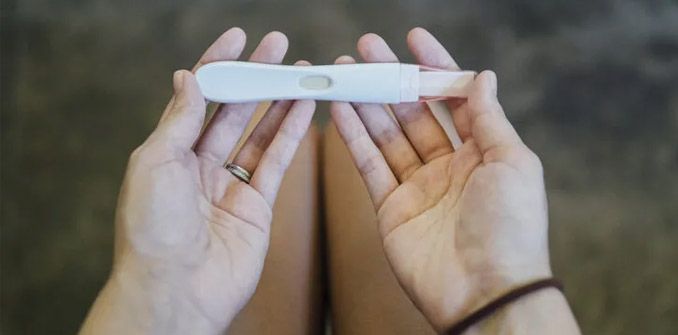
The most important reason why a chocolate cyst directly affects pregnancy is that the place where it forms is the main organs related to reproduction.
Although cysts occurring in the ovaries create a risk for pregnancy, it is possible to become pregnant. For those who want to conceive, other treatment methods are preferred more rather than suppressive treatments such as birth control or delaying menstruation.
With the treatment of endometriosis, the likelihood of pregnancy can be increased. One of the first options is usually the removal of the chocolate cyst by laparoscopic or robotic means. But the important point is the fact that we do not, and indeed should not, operate on every chocolate cyst we see. This is because a significant number of patients can become pregnant on their own without any treatment being carried out.
As for the important points, the group that will not be able to become pregnant on their own and that will be able to become pregnant with surgical treatment needs to be identified well from the outset. Laparoscopy is the general name given to the procedures of entering the body through an opening made just below the navel to examine the abdominal cavity and the internal organs, and, where necessary, of carrying out the intervention with additional openings.
As well as being quite easy, this operation may also be preferred because it is closed. Today, chocolate cysts are not operated on in an open manner unless there is a very exceptional situation.
In women with a chocolate cyst, ovarian chocolate cysts can be removed with the application of laparoscopy. Blockages in the tubes or endometriosis foci located in the pelvis can be cleared. After this procedure, pregnancy on its own may be possible between 6 and 9 months.
After surgery, while the monthly chance of pregnancy increases by approximately 4-5% in patients with stage I or II disease, the increase is 1-2% in patients with stage III or IV.
Our patients should definitely know that in women who are operated on with laparoscopy or robotic surgery with a diagnosis of endometriosis, the highest chance of pregnancy occurring is in the first six to nine month period after surgery. This period, in which the chance of becoming pregnant is highest, should not be spent using contraception.
It is necessary to act very carefully particularly in patients whose egg reserve is very low from the outset, who have had repeated endometriosis surgery or who have endometriomas in both ovaries.
Because the endometriosis reserve is very limited, in vitro fertilisation if the patient is married, or egg freezing if she is single, should definitely be kept in mind as a very important treatment option, and quickly. Carrying out surgical treatment in these patients with low ovarian reserve may bring more harm than benefit.
In patients in whom surgical treatment definitely has to be carried out, starting with IVF first, then carrying out surgical treatment after the eggs have been collected, and embryo transfer after the recovery period, markedly increases the chance of becoming pregnant.
It is possible to increase fertility with IVF procedures. Because in vitro fertilisation (IVF), that is to say ‘test tube baby procedures’, enables the sperm and the egg to be brought together in a laboratory setting, this method comes to the fore for women with infertility due to endometriosis.
If pregnancy has not occurred within 1 year after surgery, assisted reproduction treatments should be moved on to. In infertile women with advanced stage endometriosis, assisted reproduction treatments [(in vitro fertilisation/embryo transfer (IVF/ET) (test tube baby)] can be moved on to directly without carrying out surgery.
In an infertile woman, treating the chocolate cyst with medical drug therapy is generally not applied in the treatment of endometriosis because it is of no benefit; on the contrary, it may delay the infertility treatment.
If there is a desire for pregnancy, this should be resolved before time is wasted here, and afterwards medical and/or surgical treatment can be considered. In patients who have very serious pain and other complaints and whose tubes are severely damaged, in vitro fertilisation quickly, followed by surgical treatment after egg/embryo freezing and embryo transfer after a short recovery period, appears before us as a very important treatment option.
Changing eating habits may also be preferred in order to strengthen the immune system and reduce the existing endometriosis. Acupuncture and herbal treatments are also among the non-surgical treatment methods you may prefer.
It is not impossible for women with a chocolate cyst to become pregnant, and there are many patients who are not aware of the chocolate cyst before becoming pregnant. Although pregnancy does not completely treat the chocolate cyst, during pregnancy chocolate cysts can be suppressed and the complaints are usually reduced.
In addition to this, it should be accepted that the chocolate cyst has no effect on the baby. It has been stated, particularly in recent years, that the chocolate cyst can also cause some problems during pregnancy, after conception.
These are premature birth, a low birth weight baby and early separation of the placenta (the afterbirth). But there is no very definite evidence and most patients give birth to healthy babies.
If you suspect it, don’t put it off
Chocolate cysts can progress silently. Let us clarify your situation with an examination and imaging.