
How Does a Chocolate Cyst Form?
Prof. Dr. Taner Usta – Obstetrics and Gynaecology Specialist
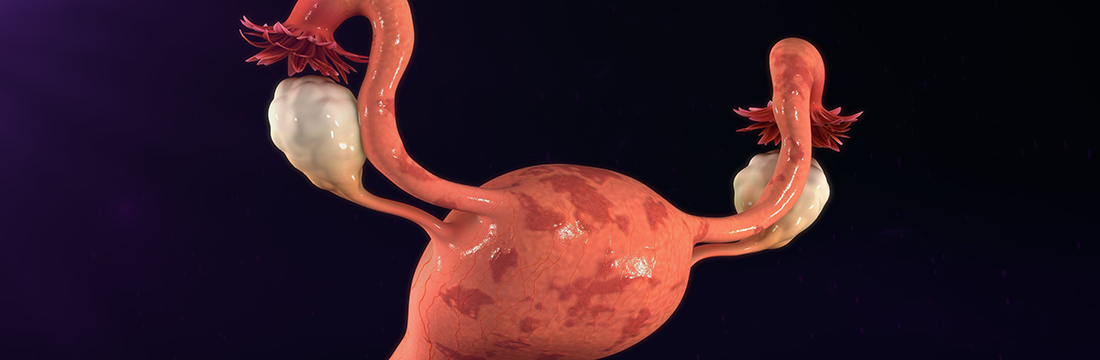
Despite all the research carried out, the exact cause of chocolate cyst (endometriosis) has still not been fully clarified. Although none of them has been completely proven, there are theories that try to explain this disease. These theories give us important information about chocolate cyst disease. Below we will share in turn the possible theories about the formation of the disease.
/p>
Endometriosis — to listen to all our Podcast recordings about it, do not forget to follow our Spotify account.
Retrograde Menstruation (the passage of menstrual blood into the abdomen)
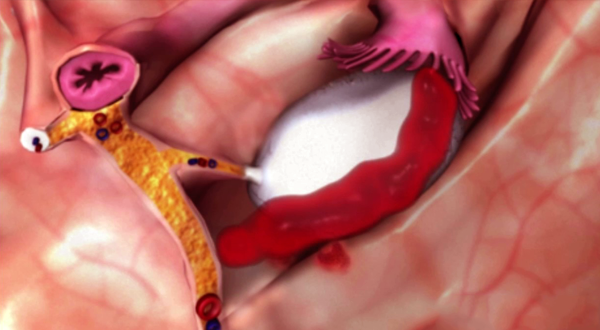
 In women of reproductive age the uterus prepares for pregnancy every month, and the inner layer of the uterus thickens and becomes a bed for the embryo to settle into. If pregnancy does not occur, this thickened inner layer of the uterus cannot continue and menstrual bleeding occurs. In some women, during menstruation the menstrual blood containing endometrial tissue can pass from inside the uterus through the tubes into the pelvis (the inside of the pelvic bone). In the studies carried out, the amount of retrograde menstruation (menstrual bleeding passing through the tubes into the abdomen) in the pelvis of women with endometriosis was found to be greater than in healthy women, and this may increase the risk of endometriotic tissue forming. In women whose immune system works fully, the endometrial tissue that settles in the pelvic bone is seen by the body as foreign tissue (tissue that should not be there) and is destroyed. But in some women this tissue cannot be destroyed by the body and endometriotic lesions emerge. However, while menstrual blood passes into the abdomen in 76-90% of menstruating women, in only 10% of these women does endometriotic tissue settle where it has passed and create endometriosis. So why does endometriosis not occur in all of them? The reason for this is explained by the genetic background. Another piece of evidence supporting this theory is that the likelihood of endometriosis increases in conditions that favour retrograde menstruation, such as imperforate hymen and cervical stenosis. Various animal experiments and clinical observations also support this theory. This theory does not explain the endometriosis seen in newborns, in girls who have not reached puberty and in men. For this reason we will also discuss the other theories below.
Metaplasia
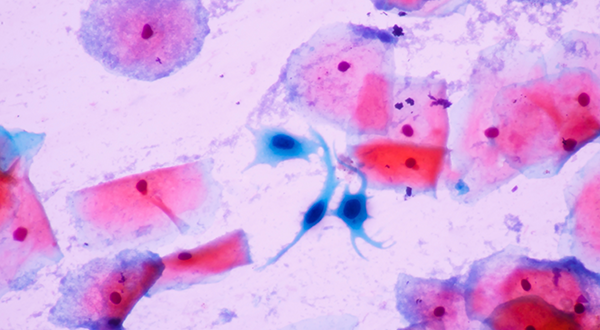
 Metaplasia, or the change of cells from one normal tissue type to another normal tissue type, is another theory. The endometrium and the peritoneum are derivatives of the same coelomic wall epithelium. The transformation of the coelomic epithelium into endometrium-type glands in response to unknown stimuli may explain endometriosis in unusual areas. The theory of coelomic metaplasia is also thought to explain the formation of endometriosis in women who have had a total hysterectomy (whose uterus and ovaries have been removed) and who are not receiving oestrogen treatment. The peritoneal mesothelium is thought to retain the embryological ability to transform into reproductive tissue. Such transformations may arise spontaneously, or the transformation may be facilitated by exposure to chronic irritation through retrograde menstruation. The fact that endometriosis can also be seen in men receiving high-dose oestrogen treatment is one of the other interesting features of the disease.
Hormones

 Steroid hormones play an important role in the development of chocolate cyst. Endometriosis is a disease of women of reproductive age and is quite rarely seen in post-menopausal women who are not receiving hormonal treatment. Oestrogen is the driving force behind the proliferation of endometrial tissue (the inner layer of the uterus), and ectopic lesions can also lead to the development of endometriosis through the effect of oestrogen. Environmental factors such as dioxin may play a part in the formation of endometriosis by imitating the effect of oestrogen on the receptor. Progesterone, on the other hand, prevents further development of endometriosis and leads to the natural resolution of the disease by inhibiting ovulation, through its suppressive effect on the endometrium, the inner layer of the uterus, in such a way as to cause decidualisation, endometrial atrophy and amenorrhoea (absence of menstruation) over a certain period of time.
Immunological Dysfunction (immune system disorder)

 Although in most women retrograde menstruation plays a part in the implantation and spread of the implants, endometriosis develops in only a small proportion of them. The menstrual tissue and endometrium that escape into the peritoneal cavity (the inside of the abdomen) are cleared by macrophages, natural killer cells and lymphocytes, which are cells of the immune system. In endometriotic tissue, impaired cellular and humoral immunity together with altered growth factor and cytokine signals have been identified. For this reason, in cases with an immune system disorder, endometriosis may form along with retrograde menstruation.
Müllerian cell remnants
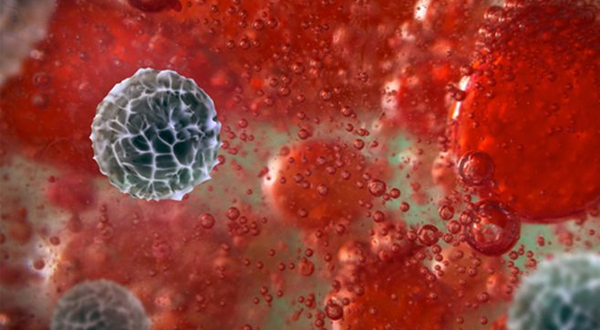
 Another theory is that Müllerian cells left over during the development of the Müllerian system remain within the pelvic tissues (the inside of the pelvic bone). With oestrogen stimulation, these cells can transform into functional inner uterine lining and stroma.
Spread via the Lymphatic and Vascular Route
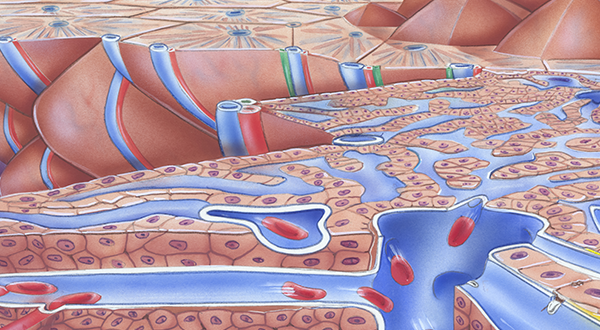
 There is also evidence supporting the idea that in endometriosis the endometrial tissue spreads via the lymphatic or vascular route. Settlement in distant organs can be explained in this way. The endometriotic tissue cells that enter this circulation can reach distant tissues and organs, settle there and create the disease.
Familial predisposition and genetic factors

 Some women may have a genetic predisposition to endometriosis. Endometriosis is thought to be a polygenic/multifactorial disease and research on this is continuing. Research has shown that the likelihood of it developing is higher in those who have endometriosis in their first-degree relatives. If endometriosis is identified in close relatives in the family, it should come to mind that it may also be present in other family members.
As a final word on the theories, no theory on its own explains all endometriotic lesions!
What do our patients say?
I am very lucky to have come across the sweetest, the most “caring” doctor in the world, who does his job in the best possible way! Many thanks for everything.
Hello and WELCOME to March, endometriosis awareness month. One in 10 women has endometriosis, some are aware of it and some are not. Pain that is generally accepted as normal may sometimes not be normal. If you are experiencing severe pain you should definitely see a doctor. Do not listen to anyone. What seems normal to everyone may not be normal for you. I too am an endometriosis patient. I had an operation in July 2018, and how glad I am that I came across @drtanerusta. ✔️ I had a cyst inside my abdomen. I was experiencing pain every month, and life is very short, so why should you spend a few days of every month lying down? For now, thank goodness, I am better, but there is no definitive solution for endometriosis. Become aware of it. Do not neglect it.
I had chocolate cyst disease too. Thanks to you I was freed from it. Now I have a 6-year-old son.
My dear doctor, I too was freed from this disease thanks to you, God willing. Many thanks for everything, may God be pleased with you, hocam
You are a wonderful doctor, I am very happy to have met you. Doctor, how good it is that you exist, I wish you to be always at the summit.
Thanks to @drtanerusta and his masterly hands I was freed from the terrible pain I had lived with for very many years, which no doctor could find the cause of. Thank you again and again, doctor, my joy in life has returned. It has been 6 months since the operation. To live without taking painkillers, without pain – what could be better than this? How glad I am that I met you, how glad I am that you came into my path. You are always in my prayers, stay with love.
I had an operation 2 months ago; I cannot describe what pain I suffered for years, what I went through up to the day of the operation! I came running from İzmir; I cannot describe how good, how excellent my doctor @drtanerusta is… I had laparoscopic surgery, the cyst was 9 cm, my abdomen had become so swollen that I had been harmed both mentally and physically. When I went to hospital because of the pain nobody understood me. I was surrounded by people saying cyst pain cannot be this bad. I left my most terrible times in the hands of my doctor @drtanerusta and now I am well, no cyst in my hand, no pain, I still cannot believe it, but they are gone.
As of the diagnosis, counting the 10 years before the diagnosis, I had had endometriosis for 15 years. My dear doctor, the one who relieved my pain and my suffering, the reason for my gratitude, one of the few doctors not only in Turkey but in the world when it comes to endometriosis, with masterly hands just like his name.
I had an operation on 20 April 2015. My operation was carried out by A. Taner Usta and his team. Extremely successful in his field, Taner hoca is truly an excellent doctor and an exceptional person. His team, in the same way, are successful and high-quality people who value others. I offer my endless thanks to all of them for their efforts. I wish everyone a speedy recovery and the chance to be treated by this team.
I had an operation on 16 June 2014. May God be pleased with him, he is a good judge of things. Bless your hands, I wish you success, Taner hocam.
Even though it was at a state hospital and it was very busy, I loved DR. TANER USTA, an excellent, attentive, solution-focused doctor who makes the patient feel special.
I thank your whole team, above all Dr. Taner Usta, who did not withhold their care and attention after the operation I had.
I thank Dr. Taner. I am very pleased to be his patient because of the care and attention he has shown.
It would not be enough just to call Altunizade Acıbadem a good hospital; it is as elegant as an A plus hotel and comfortable at the same time. The staff were young, bright and helpful, and my check-up doctor created a feeling of trust in me. The information he gave was sufficient for me, and I would like to state in particular that I was very impressed by the knowledge, the approach to the patient with professional warmth and the experience of Obstetrics and Gynaecology doctor Prof. Dr. Taner Usta, and that I have already recommended him to all those close to me.
In my research about my illness we came across the name of Prof. Dr. Taner Usta. When I called him on his personal telephone he took care of me straight away and I reached him urgently. When he welcomed me in his room at the hospital and examined me, I understood for the first time in my 7 years of illness that a doctor understood me and would relieve my pain. He was so experienced that he explained to me one by one the causes of my complaints, which no professor I had been to until then had understood, and he carried out my operation very successfully. I thank him endlessly both for his medical knowledge and for his approach to patients and his cheerful face.
First of all I was extremely pleased that your new hospital has opened in this area. Prof. Dr. Taner Usta is a very, very attentive and knowledgeable doctor. I was also very pleased to meet him. I believe I made a very right choice. I will definitely recommend him to my friends around me.
If you suspect it, don’t put it off
Chocolate cysts can progress silently. Let us clarify your situation with an examination and imaging.