
How Is Chocolate Cyst Disease Diagnosed?
One of the most important points in treating diseases correctly is that the diagnosis is definitely made correctly. For example, pain in the patient’s groin area may arise from a chocolate cyst, but…
One of the most important points in treating diseases correctly is that the diagnosis is definitely made correctly. For example, pain in the patient’s groin area may arise from a chocolate cyst, but it may also arise from a chronic inflammatory condition, from adenomyosis (a disease that occurs as a result of the endometrium, the inner layer of the uterus, settling into the muscle layer of the uterus) or from adhesions in the bowel due to previous operations.
Endometriosis — to listen to all our Podcast recordings about it, do not forget to follow our Spotify account.
Of course the treatment of each one is also different from the others. The following steps are frequently carried out for the diagnosis of chocolate cyst disease. To diagnose endometriosis, your doctor checks whether there are abnormal changes in your body, asks about your complaints and then performs a gynaecological examination. However, it is very difficult to obtain an accurate result without more advanced tests being carried out. We will discuss these in turn.
Detailed Medical History:
At the outset, a detailed history is always taken. Your symptoms and complaints and your family history are asked about in detail. The symptoms frequently seen in chocolate cyst disease must be asked about by the doctor even if the patient does not report them.
Gynaecological Examination:
It is performed in order to check the patient’s vagina, uterus, cervix (the neck of the womb), bladder and rectum. The doctor checks whether there is any change in the shape, size and colour of the organs or whether there is any mass present (especially in the ovaries). The patient’s vagina and cervix are checked with a “speculum”. In particular, it is investigated whether there are nodules behind the cervix that can be seen in Deep Infiltrating Endometriosis (DIE). These nodules sometimes also involve the vaginal wall and can be seen on examination as a black-blue lesion on the vaginal wall. When DIE is present, it is specifically examined whether there is involvement of the rectum (the section of bowel where stool is stored last). In addition, again during the examination, the presence of painful trigger points on the vagina, behind the cervix – the sacrouterine ligaments – and/or the rectum, which are frequently involved in DIE, is investigated. If the patient has pain, a ‘’pain map’’ is drawn up. According to the pain map, important information is obtained about the areas that are involved. If there is a painful point, the treatment plan is always made in such a way as to include this lesion. Unfortunately, if these lesions are not identified beforehand, they may not be removed during the operation and as a result this may lead to treatment failure. Therefore it is extremely important that the examination is carried out by a doctor experienced in endometriosis.
Ultrasonography (USG):
((Transvaginal USG / Transrectal USG)
In the imaging method known among the public as ‘’ultrasound’’, high-frequency sound waves are used to investigate the gynaecological organs in the pelvic region (the inside of the pelvic bone). In this test the doctor examines the gynaecological organs vaginally, or rectally if the patient has never had sexual intercourse. Although the ovaries, the uterus and the vagina in the pelvis are examined in particular, the rectum, the urinary tract and the bladder (the urine sac) are also included in the examination. The presence of a nodule in the rectovaginal area is always investigated. Sometimes, for these nodules, both transvaginal and transrectal USG can be performed in the same session. In this examination the patient receives no radiation. The procedure is easy and it is a repeatable examination method.
One of its most important features is that it can be performed immediately together with the gynaecological examination. A doctor experienced in chocolate cyst can, without needing many imaging methods, make a full diagnosis and plan the treatment with the ultrasonography performed together with the examination. One of the important problems is that many doctors focus only on the ovaries on USG for the diagnosis of chocolate cyst disease. If there is no chocolate cyst in the ovaries, this disease may not come to mind. The absence of a chocolate cyst in the ovaries does not mean that chocolate cyst disease is not present. Therefore the doctor’s experience is very important for a correct diagnosis and assessment.
Magnetic Resonance Imaging (MRI):
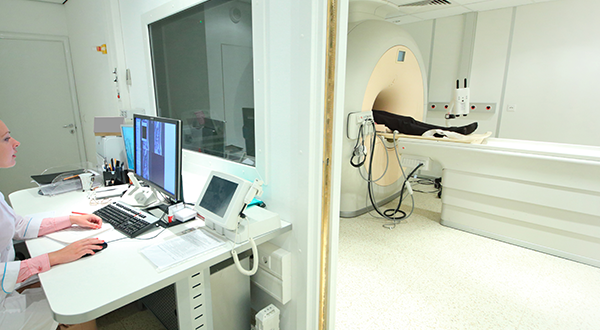
In disease that is not limited to the ovaries alone, in situations where involvement of a neighbouring organ (especially the bowel) is suspected (Deep Infiltrating Endometriosis), and in situations that cannot be clearly distinguished with ultrasonography (cancer?), MRI is used. One of the important points regarding MRI is that the radiologist who will interpret the MRI must certainly be experienced in this field and must be in communication with the gynaecologist. That is, if the gynaecologist plans the treatment on the basis of the MRI report alone, the likelihood of making a mistake increases. With very well performed ultrasonography, the routine use of MRI has today become quite limited.
Rectoscopy (EUS):
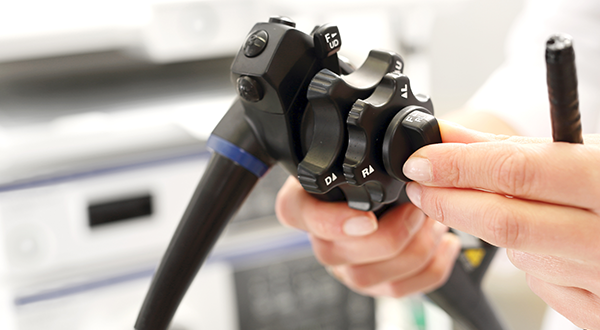
In Deep Infiltrating Endometriosis, especially in bowel (rectal) involvement, it can be performed in selected cases in order to understand how much of the bowel wall is involved, in particular whether the bowel mucosa is involved, and whether there is a narrowing in the passage of stool. In this procedure, assessment can be made with special devices – EUS (in which there is also an ultrasound at the tip of the instrument) – during the endoscopic procedure. In patients with bowel involvement, this procedure is extremely important for planning the surgical treatment.
Intravenous Pyelography (IVP), Computerised (CT) Urography, Magnetic Resonance (MR) Urography:
It is an investigation carried out for the purpose of imaging kidney function, the collecting systems and the entire urinary system by taking a series of images at certain intervals after the injection of a drug into a vein. It is performed especially in cases where the tubes carrying urine from the kidney to the bladder are under pressure or narrowed because of a chocolate cyst. While IVP was more widely performed in the past, today CT or MR urography is more widespread; the substance given into the vein stains the urinary tract and is then excreted. In cases where loss of kidney function is suspected, it may be necessary to perform a scintigraphy.
CA125 Test:
This test checks the level in the blood of a protein known as CA125, which is a marker of the tumours in some gynaecological cancers (ovarian, uterine cancer) but which is at the same time also present in the blood of women who have endometriosis. However, CA125 levels can also be high because of pregnancy, menstruation (the menstrual period) and other gynaecological diseases or cancers. Today, both national and international treatment guidelines on the treatment of chocolate cyst do not recommend that it be checked routinely.
HE-4 Test (Human Epididymis Protein 4: HE4):
This protein is used in particular to distinguish complex masses in the ovaries from simple cystic structures (including chocolate cysts). While it is at a normal (low) level in chocolate cyst, it can be raised in ovarian and uterine cancer. The fact that it can be checked in the blood at any point in the menstrual cycle is also an important advantage.
Ovarian Reserve Tests:
In those who wish to have children, those with bilateral chocolate cysts or those who have undergone repeated endometriosis surgery, it is extremely important to learn the condition of the ovaries before the operation. In patients whose ovarian reserve is very low, it may be recommended to postpone treatment until after infertility treatment or the freezing of eggs or embryos, before surgical treatment.
Laparoscopy:
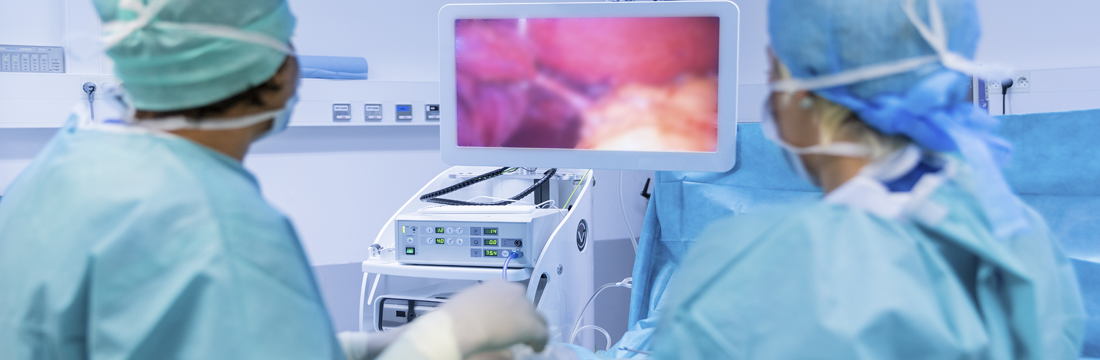
The definite diagnosis of endometriosis is made by seeing the lesions laparoscopically and by the pathological examination of tissue samples taken from these lesions. In the same session both the presence and the extent (stage) of the disease are assessed, and thanks to the tissue sample a definite diagnosis is made. But today laparoscopy (Diagnostic Laparoscopy) is not performed only to diagnose the disease. Laparoscopy is performed if surgical treatment is also to be carried out.
What do our patients say?
I am very lucky to have come across the sweetest, the most “caring” doctor in the world, who does his job in the best possible way! Many thanks for everything.
Hello and WELCOME to March, endometriosis awareness month. One in 10 women has endometriosis, some are aware of it and some are not. Pain that is generally accepted as normal may sometimes not be normal. If you are experiencing severe pain you should definitely see a doctor. Do not listen to anyone. What seems normal to everyone may not be normal for you. I too am an endometriosis patient. I had an operation in July 2018, and how glad I am that I came across @drtanerusta. ✔️ I had a cyst inside my abdomen. I was experiencing pain every month, and life is very short, so why should you spend a few days of every month lying down? For now, thank goodness, I am better, but there is no definitive solution for endometriosis. Become aware of it. Do not neglect it.
I had chocolate cyst disease too. Thanks to you I was freed from it. Now I have a 6-year-old son.
My dear doctor, I too was freed from this disease thanks to you, God willing. Many thanks for everything, may God be pleased with you, hocam
You are a wonderful doctor, I am very happy to have met you. Doctor, how good it is that you exist, I wish you to be always at the summit.
Thanks to @drtanerusta and his masterly hands I was freed from the terrible pain I had lived with for very many years, which no doctor could find the cause of. Thank you again and again, doctor, my joy in life has returned. It has been 6 months since the operation. To live without taking painkillers, without pain – what could be better than this? How glad I am that I met you, how glad I am that you came into my path. You are always in my prayers, stay with love.
I had an operation 2 months ago; I cannot describe what pain I suffered for years, what I went through up to the day of the operation! I came running from İzmir; I cannot describe how good, how excellent my doctor @drtanerusta is… I had laparoscopic surgery, the cyst was 9 cm, my abdomen had become so swollen that I had been harmed both mentally and physically. When I went to hospital because of the pain nobody understood me. I was surrounded by people saying cyst pain cannot be this bad. I left my most terrible times in the hands of my doctor @drtanerusta and now I am well, no cyst in my hand, no pain, I still cannot believe it, but they are gone.
As of the diagnosis, counting the 10 years before the diagnosis, I had had endometriosis for 15 years. My dear doctor, the one who relieved my pain and my suffering, the reason for my gratitude, one of the few doctors not only in Turkey but in the world when it comes to endometriosis, with masterly hands just like his name.
I had an operation on 20 April 2015. My operation was carried out by A. Taner Usta and his team. Extremely successful in his field, Taner hoca is truly an excellent doctor and an exceptional person. His team, in the same way, are successful and high-quality people who value others. I offer my endless thanks to all of them for their efforts. I wish everyone a speedy recovery and the chance to be treated by this team.
I had an operation on 16 June 2014. May God be pleased with him, he is a good judge of things. Bless your hands, I wish you success, Taner hocam.
Even though it was at a state hospital and it was very busy, I loved DR. TANER USTA, an excellent, attentive, solution-focused doctor who makes the patient feel special.
I thank your whole team, above all Dr. Taner Usta, who did not withhold their care and attention after the operation I had.
I thank Dr. Taner. I am very pleased to be his patient because of the care and attention he has shown.
It would not be enough just to call Altunizade Acıbadem a good hospital; it is as elegant as an A plus hotel and comfortable at the same time. The staff were young, bright and helpful, and my check-up doctor created a feeling of trust in me. The information he gave was sufficient for me, and I would like to state in particular that I was very impressed by the knowledge, the approach to the patient with professional warmth and the experience of Obstetrics and Gynaecology doctor Prof. Dr. Taner Usta, and that I have already recommended him to all those close to me.
In my research about my illness we came across the name of Prof. Dr. Taner Usta. When I called him on his personal telephone he took care of me straight away and I reached him urgently. When he welcomed me in his room at the hospital and examined me, I understood for the first time in my 7 years of illness that a doctor understood me and would relieve my pain. He was so experienced that he explained to me one by one the causes of my complaints, which no professor I had been to until then had understood, and he carried out my operation very successfully. I thank him endlessly both for his medical knowledge and for his approach to patients and his cheerful face.
First of all I was extremely pleased that your new hospital has opened in this area. Prof. Dr. Taner Usta is a very, very attentive and knowledgeable doctor. I was also very pleased to meet him. I believe I made a very right choice. I will definitely recommend him to my friends around me.
If you suspect it, don’t put it off
Chocolate cysts can progress silently. Let us clarify your situation with an examination and imaging.